


A reopen days later usually means the person came back to think about your email, not that they forgot about it. It's a real signal, but not a guarantee, and it doesn't always mean what you'd hope.
To understand what a reopen actually means, we reviewed discussions on Reddit from recruiters, hiring managers, sales professionals, and job seekers, along with the most common email tracking questions people ask. Here is what we found.
Why Someone Might Reopen Your Email
There are five common reasons a reopen happens days after the first open.
1. They finally had time
A lot of people don't reply the moment they read something. They open it, register it, and move on, then come back once they actually have a few minutes to deal with it properly.
This pattern showed up across very different contexts. During our research, recruiters and agency described slightly different workflows, but the underlying reason was the same: high volume, limited time.
One recruiter on Reddit put it bluntly: "They are working on 20 open searches. They have 300 candidates in their pipeline." Sales teams described similar behavior when reviewing proposals, an open with no immediate reply usually means the timing was wrong the first time, not that the decision-maker lost interest.
Our take: wait another day. Then send a short follow-up. There's no urgency to manage here, just a delay in attention.
2. They're comparing options
This one shows up constantly across recruiters, candidates, vendors, and freelancers alike. A reopen can mean someone is weighing your email against someone else or , another proposal before deciding what to do.
One recruiter described exactly this kind of internal weighing process inside a hiring process: "They either are at the offer with another candidate and you are the silver medalist." The reopen isn't about you specifically, it's part of a bigger decision happening on their end, often involving other decision-makers you can't see.
Our take: avoid sending multiple reminders. You're still in the running. Sending pressure into a comparison process you're not part of usually backfires.
3. They forwarded it internally
Very common in any process involving more than one decision-maker. A hiring manager forwards your application to a teammate. A recruiter shares it with the hiring manager. A buyer loops in a colleague before responding through their applicant tracking system or inbox.
A reopen in this case might not even be the same person opening it twice. It could be a second person opening the same email for the first time.
Give them time. A forward usually means your email cleared the first filter and is now part of a wider conversation, that's a good sign, not a bad one.
4. They reopened it after your follow-up
Sometimes a reopen of the original email happens right after you send a follow-up. Your second message reminded them the first one existed, and they went back to check it before replying to either.
If you're unsure whether the timing of your follow-up was right in the first place, our guide on email follow-up strategy based on opens and clicks explains how we think about different open patterns and what they suggest about timing.
Our take: hold off on a third message. Your follow-up already worked, the reopen is the proof, give the reply time to follow.
5. They still haven't decided
Sometimes a reopen just means someone is sitting with a decision they haven't made yet, rereading the same email because nothing new has changed their mind either way. This is common across long sales cycles and multi-stage hiring processes alike, where the decision-maker isn't avoiding you, they're just stuck.
A light follow-up is fine here, but keep it low-pressure. Don't push for an answer, just give them an easy way to respond if they're ready, something like offering a quick call or asking if they need anything else from you.
When a Reopen Doesn't Mean Anything
Not every reopen is a signal worth reading into. A few common, completely unremarkable reasons a reopen can happen:
- An accidental reopen while scrolling through the inbox
- Searching the inbox for something unrelated and clicking your email by mistake
- Forwarding the email to someone else without re-reading it themselves
- Checking an attachment again for an unrelated reason
- Opening it from a different device that wasn't synced with the first open
None of these involve the recipient actually reconsidering your message. This is part of why a reopen should always be read alongside context, not on its own.
So, Should You Follow Up?
Generally, yes, but the timing depends on context, not a fixed rule.
If this reopen happened after a job application, our guide on recruiters opening your follow-up but not replying covers that exact situation in more depth once it's published. If you are applying for internships specifically, these internship follow-up email examples show what to send once enough time has passed.
Interview processes are slightly different from applications. If the company ultimately rejects you, you can check how to ask for feedback after an interview rejection to close that conversation professionally.
Most Mistakes People Make With Reopen Signals
Assuming reopen is a yes. A reopen is interest or consideration, not a confirmed answer. Treating it as a green light leads to follow-ups that come across as presumptuous.
Sending another email immediately. If they just reopened it, give them the time that reopening implies, they're actively engaging with it right now, not asking for more input.
Overthinking one signal. A single reopen isn't a verdict. It's one data point in a process that usually involves more people and more steps, including hiring managers, recruiters, or other decision-makers reviewing the same thread.
Ignoring context. A reopen the same week you sent a follow-up means something different than a reopen a month later out of nowhere. The surrounding timeline matters as much as the reopen itself. Sometimes the real issue isn't a reopen at all, it's whether your email was ignored altogether. We break down that distinction in how to know if someone ignored your email.
Inbox Research: What We Found
Across recruiter discussions, Reddit threads, and email tracking questions, we noticed three patterns appeared consistently:
- Recruiters and hiring managers often revisit emails while comparing candidates or waiting on internal decisions
- A reopen is a stronger signal than "never opened," but much weaker than an actual reply
- Most people send another follow-up too quickly after seeing a reopen notification
The best approach is to treat a reopen as one signal, not the only signal, when deciding whether to follow up.
How MailTracker Shows You This
MailTracker sends a separate notification when a tracked email is reopened after a period of inactivity, distinct from the first-open alert.
It shows you the time since the original send and the time since the last open, so you're not guessing at the gap, you're seeing it.
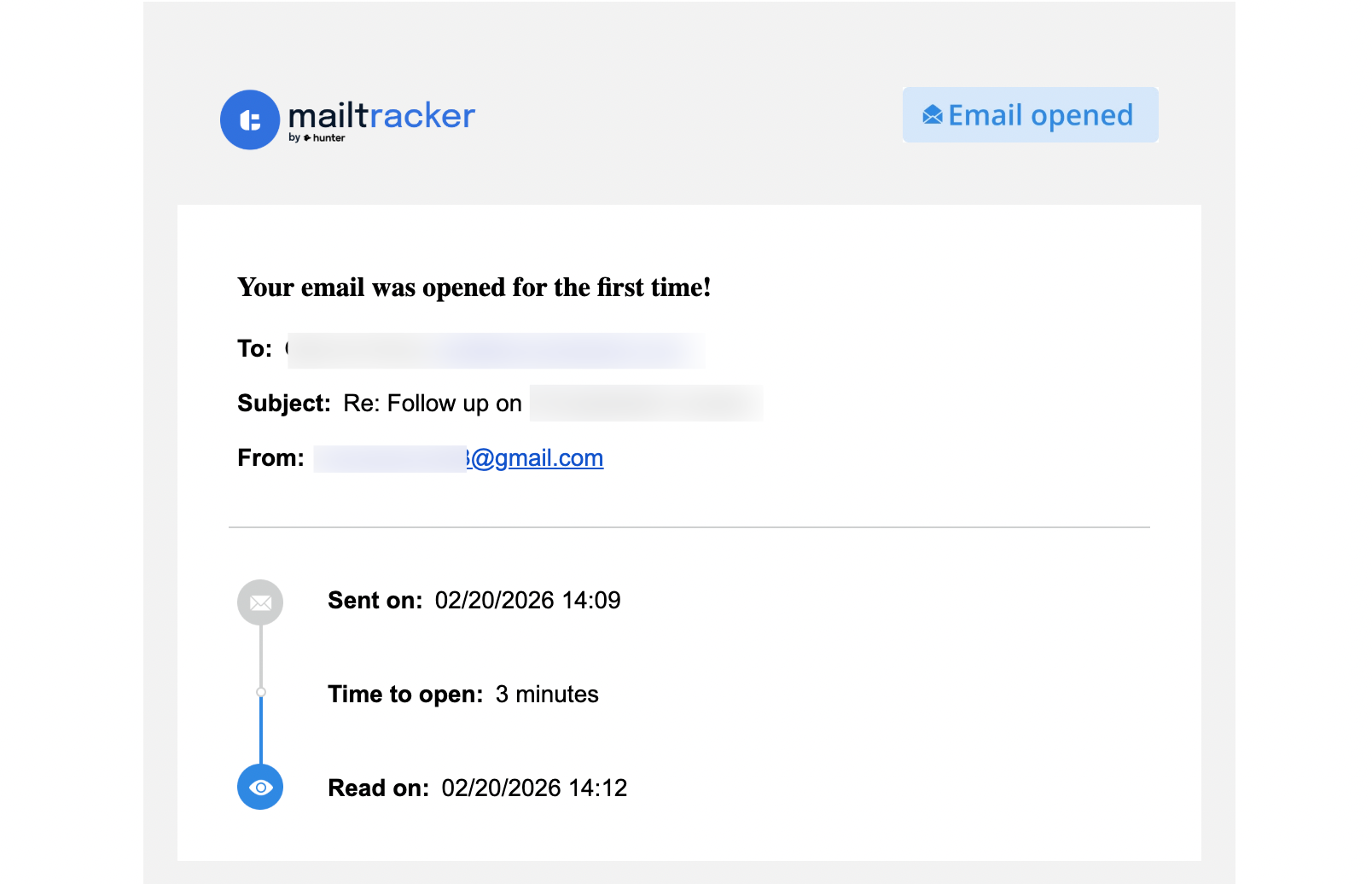
Without it, a reopen is invisible, you'd have no way to tell the difference between "reopened an hour ago" and "reopened a week later," even though those two situations call for completely different responses.
Frequently Asked Questions
Does a reopened email mean they're interested?
Yes, but it’s not a confirmation. A reopen means your email is still part of an active decision somewhere on their end, but it doesn't guarantee a reply is coming.
How long after a reopen should I follow up?
It depends on the gap. A same-day reopen usually means they just got around to it, no rush needed. A reopen after several days or a week is a better moment to send a short, low-pressure follow-up.
Can a reopen happen without the recipient intentionally reading my email again?
Yes. Searching the inbox, forwarding the email, checking an attachment, or opening it from a different device can all register as a reopen without the recipient actually re-reading your message.
Can a reopen mean someone forwarded my email to someone else?
Yes. If a hiring manager, recruiter, or buyer shares your email with a colleague, that second person opening it can register as a reopen, even though it's a different person seeing it for the first time.
Is it bad to follow up right after someone reopens my email?
No, but timing matters. If the reopen just happened, give it a little room before reaching out again, they may already be in the process of replying.

