


Most guides on email timing repeat the same marketing benchmarks. We wanted to look at something more useful: real one-to-one emails.
At MailTracker, we analyzed 5,324 tracked emails using open timestamps, reopen behavior, reply timing, and follow-up activity to see which days and hours actually generate the most engagement.
What we found was clear: Monday morning performed best overall, but send time was only part of the story.
TL;DR for Best Day and Time
Based on our analysis of 5,324 tracked emails:
-
Best day: Monday
-
Second best: Tuesday
-
Best time: 8–10 AM
-
Second best: 10 AM–12 PM
-
Lowest engagement: After 4 PM
For one-to-one emails, the best results came from messages sent when people were actively reviewing their inbox, not later in the day when replies were more likely to be deferred.
Our Methodology
This analysis is based on 5,324 real one-to-one emails sent through Gmail and tracked with MailTracker between 2025 and 2026.
These were not newsletters, automated sequences, or marketing campaigns.
Each email in the dataset was sent from one real person to another, which makes this study a closer reflection of everyday email behavior.
For each email, we tracked:
- First open timestamp: when the recipient opened the email for the first time
- Reopen count: how many times they returned to the same email
- Reply timing: how long after the first open a reply arrived
- Follow-up activity: whether another email was sent afterward
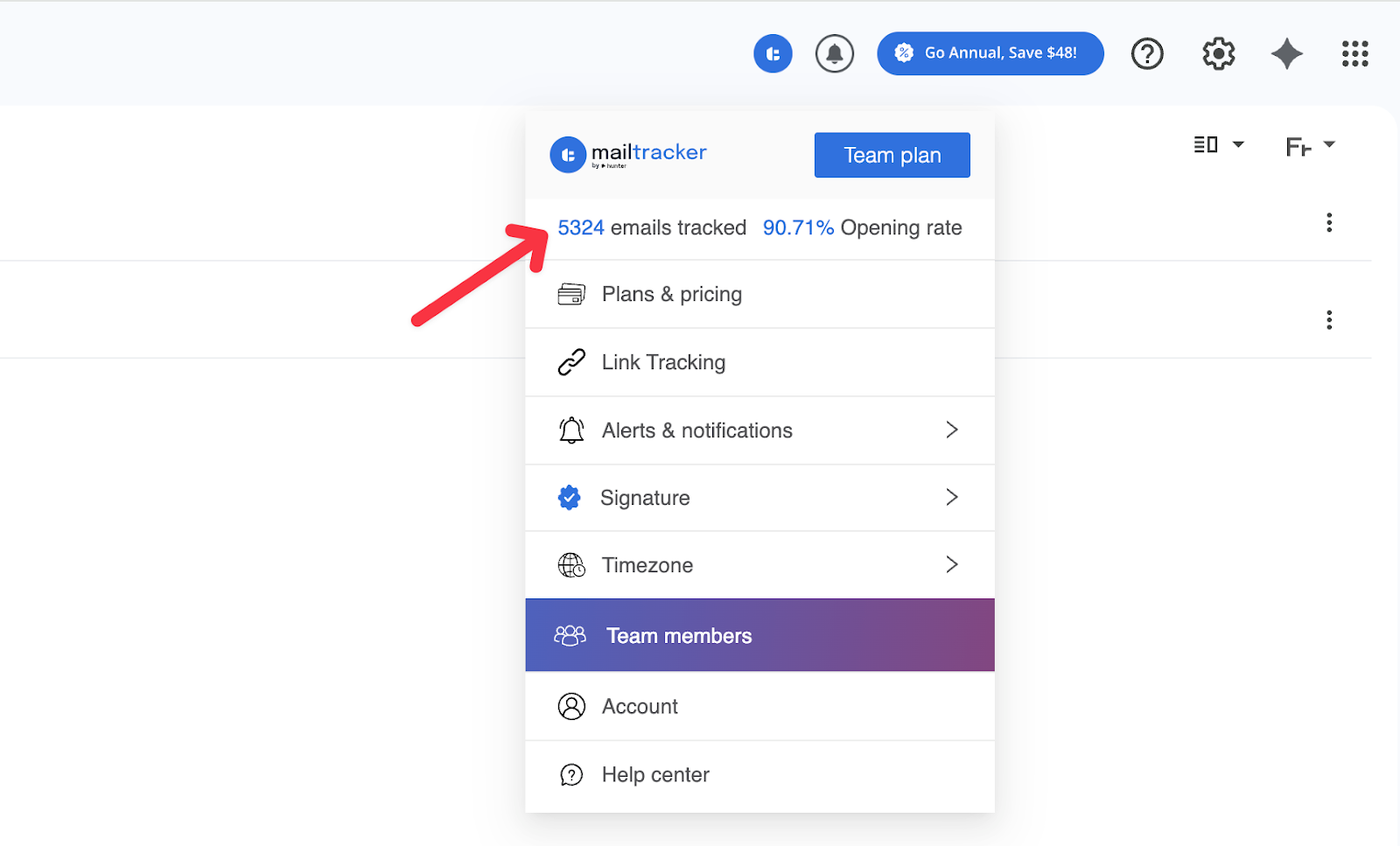
Together, these signals show not just whether an email was opened, but when people engaged and when they decided to respond.
8 AM to 10 AM Was the Best Time Window
The best time to send emails is between 8 AM and 10 AM.
Across our dataset of 5,324 emails, this time window produced the highest open rates and the fastest replies of any period during the day.
The reason is simple: inbox position.
When someone opens their email first thing in the morning, they see the most recent messages at the top. Emails sent during this window are more likely to be immediately visible.
An email sent at 9:15 AM is front and center. An email sent at 4:30 PM the previous day is already several messages deep.
For one-to-one emails, there are no templates or visual tricks to stand out. You are competing on timing and relevance.
The morning window works because it places your email at the top of the inbox at the exact moment someone is ready to process messages.
How Engagement Drops Through the Day
Engagement drops significantly after midday. Emails sent between 1 PM and 3 PM are still opened, but same-day replies decrease noticeably.
After 4 PM, most emails are deferred. They may be read quickly, but are often postponed until the next day when the recipient returns to their inbox.
The 10 AM to 12 PM window still performs well and is the next best option if you miss the early morning slot.
Monday Morning Produced the Most Opens and Replies
Monday morning is the best time to send emails.
In our analysis of 5,324 emails, messages sent on Monday morning generated more first opens and more same-day replies than any other day of the week.
This pattern is consistent because Monday morning is when people actively process their inbox.
At the start of the week, recipients are reviewing messages, prioritizing tasks, and making decisions. Emails that arrive during this window are more likely to be seen and acted on immediately.
An email sent between 8 AM and 10 AM on Monday is typically at the top of the inbox at the exact moment people are ready to respond.
This trend held across all types of emails in our dataset, including cold outreach, client communication, and follow-ups.
Thursday Generated High Interest, But Slower Replies
Thursday emails show a different pattern: high engagement, but slower replies.
In our dataset, emails sent on Thursday were reopened more times than emails sent on any other day, meaning recipients kept coming back to them.
This is a strong signal of interest.
However, replies were slower and less frequent compared to Monday or Tuesday.
This likely happens because Thursday emails arrive when people are mentally wrapping up the week. They read carefully and engage with the content, but often delay responding until later.
If you’re sending something that requires a considered response (a proposal, a request for feedback, or a thoughtful question), Thursday can work well because people engage more deeply with it.
Just expect the reply to come later, often on Monday.
Friday Emails Get Seen, But Replies Are Delayed
Emails sent on Friday are often opened, but replies are typically delayed until the following week.
In our dataset, many Friday emails were opened the same day, but responses came predominantly on Monday morning, when recipients returned to their inbox and worked through pending messages.
By Friday afternoon, most people are shifting out of execution mode. They may read your email, but they are less likely to take action immediately. Instead, the message gets mentally deferred.
Sending an email on Friday afternoon is effectively sending it for Monday, but with a worse inbox position and a stale timestamp.
Open Behavior Tells You More Than Send Time
What happens after you send an email matters more than when you send it.
Timing helps your email get seen. But whether someone replies depends on something else: how they engage with it after opening.
The strongest signal in our dataset was reopen behavior.
Look at this example from MailTracker:
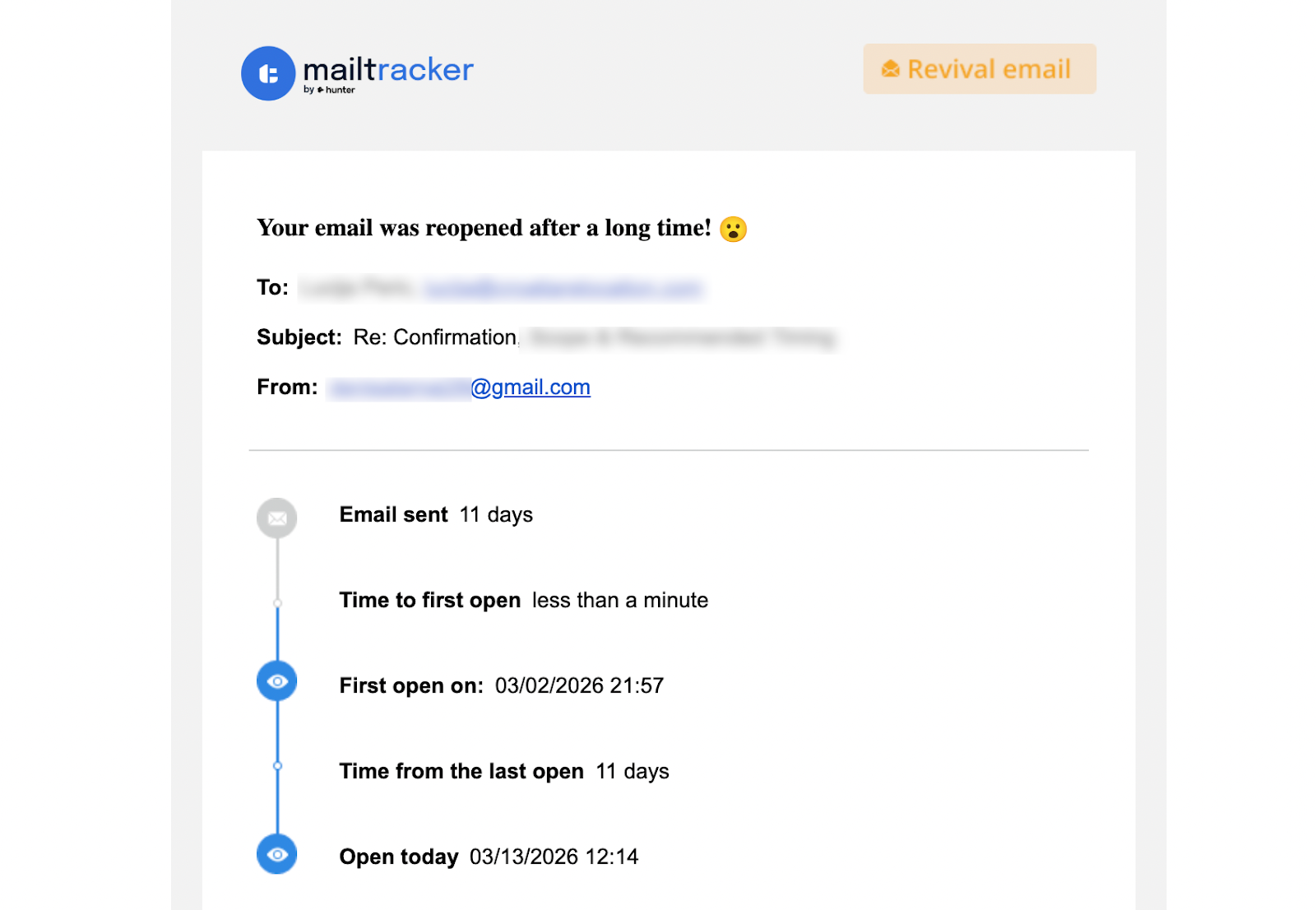
This email was sent 11 days ago and opened within less than a minute, so the recipient clearly saw it.
No reply came.
Then, 11 days later, they reopened the email. That’s not passive behavior but intentional. The recipient didn’t forget the email, but went back to find it.
MailTracker flags this as a “revival email,” an email that gets reopened after a long period of silence.
And that moment is your real follow-up window. Not day 3. Not day 5.
The moment someone reopens your email is the moment they’re actively thinking about it. That’s when a follow-up is most likely to get a reply.
In our dataset, emails that were opened multiple times before a reply had significantly higher reply rates than emails opened only once.
Reopens are not random. They are intent signals.
The Smarter Way to Follow Up
Most advice suggests a different follow-up strategy, for example, after three to five days if you haven’t heard back.
That’s a reasonable default, but it ignores the most important signal you actually have: what the recipient did after your email was sent.
A smarter approach is to follow up based on behavior, not time. If your email gets reopened, that’s your best follow-up window.
A follow-up sent within a few hours of a reopen is almost always better timed than one sent on a fixed schedule.
Instead of asking “Has it been 3 days?”, ask “Are they engaging with my email right now?”
If you want a deeper breakdown of how to time your follow-ups based on real behavior, we explain it step by step in our guide on when to send a follow-up email.
That’s exactly what MailTracker is built for. It shows opens, reopens, and engagement signals in real time, so you can follow up when it actually matters.
Frequently Asked Questions
When do most people open emails?
Most emails are opened within the first hour. In our analysis of 5,324 emails, 70% were opened within 60 minutes of being sent, meaning recipients usually see emails shortly after they arrive.
Is it okay to follow up on the same day?
Yes, but only in specific cases. Same-day follow-ups work best if your email was opened multiple times or reopened after a period of silence. If it was opened once with no reply, it’s better to wait one business day.
What does it mean if someone opens your email multiple times?
Multiple opens usually indicate interest. The recipient may be reviewing your message, considering a response, or sharing it internally, which often leads to higher reply rates.
What does it mean if an email is reopened after days or weeks?
A reopen after silence is a strong intent signal. It means the recipient actively returned to your email, and the best time to follow up is within a few hours of that reopen.
What if my email was never opened?
A never-opened email is usually a timing issue, not a rejection. In our dataset, emails not opened within two days were unlikely to be opened later without a follow-up, so the best approach is to resend at a different time.
How many times should you follow up?
In most cases, one well-timed follow-up is enough. Following up based on behavior (opens or reopens) is more effective than sending multiple follow-ups on a fixed schedule.

