


Over the past year, I've talked with dozens of people who've negotiated their job offers and tracked the emails in MailTracker.
Here's what I've learned: the negotiation emails that get reopened 3+ times almost always result in a better offer.
Multiple reopens mean your email is being forwarded, HR is looping in finance, the hiring manager is making your case internally.
The emails that get ignored? They're vague. "I was hoping for a more competitive salary" with no research, no specific number, and no justification.
Below are 8 templates for different negotiation scenarios, designed to get reopened and taken seriously (not dismissed as unrealistic).
How to Write a Salary Negotiation Email That Gets Taken Seriously
From talking with people who've successfully negotiated and tracking their email behavior, here's what actually works:
1. Use Specific Numbers, Not Ranges
Emails with exact numbers ($85,000–$92,000) get reopened 2–3x more than vague "competitive salary" requests.
One person I spoke with asked for "a more competitive offer" and never got a response. They resent with "$88,000 based on market research" and got a reply within 2 hours. HR needs concrete data to advocate for you internally.
2. Show Your Research
When people mention Glassdoor, Payscale, or similar role salaries in their city, their emails get forwarded to decision-makers. Generic "I deserve more" emails? They're dead ends.
I've seen this pattern repeatedly, emails with market data get taken seriously, emails without it get ignored.
3. Timing Is Everything
The best time to negotiate is after the written offer but before you accept. Once you say "yes," your leverage drops to zero.
I've tracked "actually, can we revisit salary?" emails sent after acceptance, they almost never get reopened.
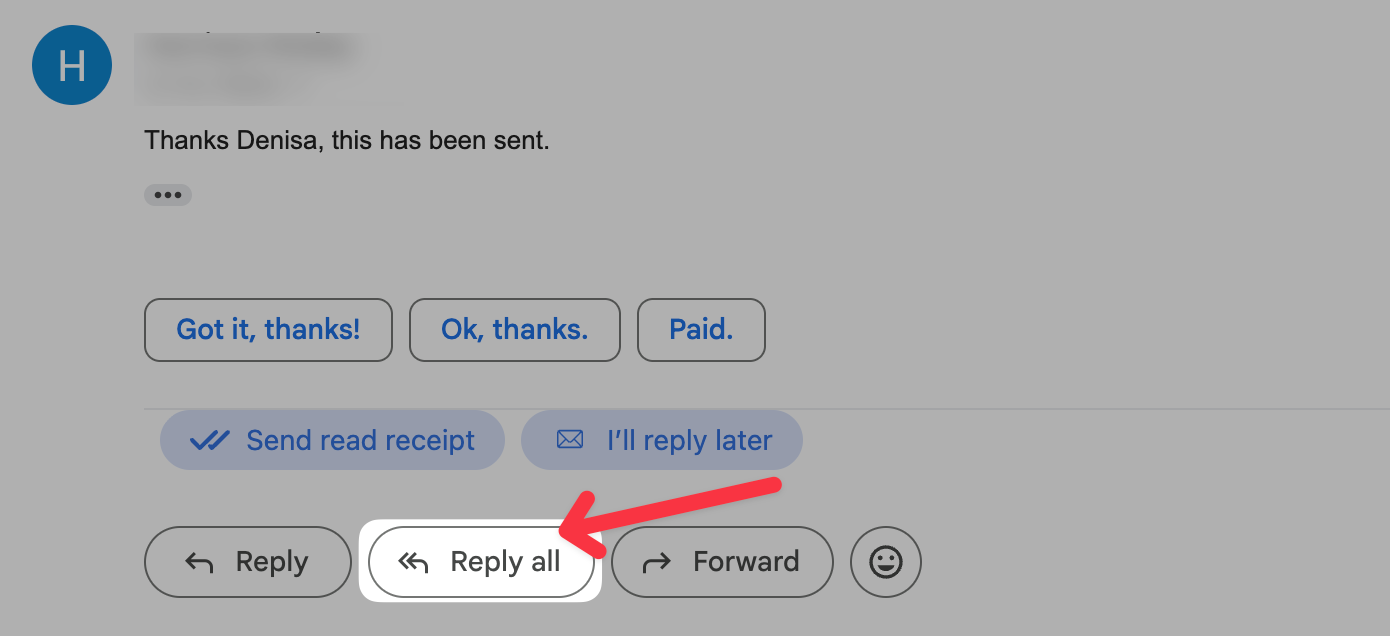
4. Reply All to the Original Thread
Always reply to the original offer email. If you send a separate email to just HR, it often never reaches the hiring manager.
One person told me they negotiated via a new email chain to HR only. Their hiring manager had no idea they were asking for more money. The request sat ignored for a week. So next time, click this here:
5. Follow Up If You Don't Hear Back
If your email hasn't been opened in 3–4 days, send a polite nudge. From our tracking data, about 40% of "ignored" salary emails eventually got reopened after a follow-up.
8 Salary Negotiation Email Examples
1. Negotiating Salary After Receiving the Offer
Best for: Your strongest position. You have the written offer and haven't said yes yet.
Subject: Re: Job Offer – [Your Name]
Hi [Hiring Manager's Name],
Thanks for the offer for the [Job Title] position at [Company Name]. I'm excited about the role and appreciate your confidence in me.
After reviewing the compensation package, I'd like to discuss the proposed salary. Based on my [X years of experience] and market research showing similar roles at [X]–[X]– [X]–[Y] in [city/industry], I was hoping we could explore a salary closer to $[X].
I'm confident we can find an agreement that works for both sides. Happy to discuss further whenever works for you.
Thanks, [Your Name]
What to watch for: If this email gets reopened 2+ times within 24 hours, it usually means HR is looping in finance or your hiring manager. That's a good sign, they're considering your request.
2. Asking for a Higher Salary Range During Interviews
Best for: Setting expectations early before the formal offer comes through.
Subject: Salary Expectations – [Your Name]
Hi [Hiring Manager's Name],
Thanks for the opportunity to interview for the [Job Title] role at [Company Name]. I've enjoyed learning more about the team and position.
As we continue, I wanted to share that my target salary range is [X]–[X]– [X]–[Y], based on my [X years of experience], [specific skill], and research into market rates for similar roles in [location].
I'm confident we can align on a package that reflects the value I'll bring to [Company Name].
Best, [Your Name]
3. Responding to a Low Salary Offer
Best for: When the offer is lower than expected but you still want the job.
Subject: Re: Job Offer Discussion – [Your Name]
Hi [Hiring Manager's Name],
Thank you for the offer for the [Job Title] role. I'm genuinely excited about the opportunity and appreciate the time your team has invested.
After reviewing the offer, I was hoping we could revisit the proposed salary. Based on my [experience/specific skills] and research showing similar roles at [X]–[X]– [X]–[Y], I was expecting something closer to $[X].
I'd love to find a solution that reflects the impact I can bring. Let me know if there's room to adjust.
Thanks, [Your Name]
What to watch for: If this email gets reopened 3+ times without a reply, internal discussions are likely happening. Don't panic. Give it 3–4 business days before following up. Multiple reopens mean they're working on it.
4. Negotiating Salary and Benefits Together
Best for: When the base salary is close but you want to negotiate bonuses, stock, or PTO.
Subject: Offer Package Discussion – [Your Name]
Hi [Hiring Manager's Name],
Thanks for the offer for the [Job Title] role. I'm excited about the position and eager to contribute.
Before moving forward, I'd like to discuss a few elements of the compensation package—specifically the base salary and additional benefits like [bonus structure/stock options/PTO].
I believe with a few adjustments, we can reach a package that works well for both of us. Happy to continue the conversation whenever's convenient.
Best, [Your Name]
5. Negotiating When You Have Another Offer
Best for: Leveraging another offer professionally without sounding threatening.
Subject: Re: Offer Discussion – [Your Name]
Hi [Hiring Manager's Name],
Thank you again for the offer for the [Job Title] role. I'm genuinely excited about the position and the team.
I wanted to be transparent: I've received another offer with a higher base salary and slightly more flexible benefits. However, [Company Name] remains my top choice based on the role and culture.
If there's room to revisit the proposed salary or package, I'd love to continue the conversation. I'm confident we can find a solution that works for both of us.
Thanks, [Your Name]
This type of email almost always gets forwarded immediately. If you see it reopened within 1 hour, they're likely moving fast to keep you. If it sits unopened for 24+ hours, they may not be willing to compete (consider your backup plan).
6. Negotiating After a Verbal Offer
Best for: Aligning on compensation before anything is finalized in writing.
Subject: Follow-Up on Our Conversation – [Your Name]
Hi [Hiring Manager's Name],
It was great talking earlier. I'm excited about the opportunity to join [Company Name] as [Job Title].
As we move toward finalizing the offer, I wanted to discuss the proposed salary. Based on my background, skills, and market research for similar roles, I was hoping we could agree on a base salary closer to $[X].
I'm confident we can find a fair agreement. Let me know if we can set up a time to continue the conversation.
Thanks, [Your Name]
Verbal offers are tricky because nothing's in writing yet. If this email gets reopened but you don't get a reply within 2 days, follow up—they may be drafting the formal offer and want to finalize numbers first.
7. Negotiating for Remote Roles
Best for: When location affects the salary offer and you want to address it.
Subject: Offer Follow-Up – Remote Setup & Compensation
Hi [Hiring Manager's Name],
Thanks for the offer for the [Job Title] role. I'm excited about the position and the flexibility of the remote/hybrid setup.
I wanted to revisit the proposed salary, particularly in relation to the responsibilities and market rates for remote roles in this industry. Based on my research, I'd like to discuss an adjustment to $[X].
I'm confident we can reach a fair agreement that works for both sides.
Best, [Your Name]
Remote salary negotiations often get reopened multiple times because companies are still figuring out their remote comp policies. If you see 5+ reopens over several days, they're likely debating internally (stay persistent but patient).
8. Following Up on Your Negotiation Email
Best for: When you've sent your request and it's been 3–4 days with no response.
Subject: Following Up – Offer & Compensation Discussion
Hi [Hiring Manager's Name],
Hope you're doing well. I wanted to follow up on my previous message about the offer for the [Job Title] role. I'm still very enthusiastic about the opportunity and look forward to finalizing the next steps.
I'd appreciate any updates you can share regarding the compensation discussion. Happy to provide any additional info if needed.
Thanks again, [Your Name]
What to watch for: If your original email was never opened, resend with a clearer subject line. If it was opened but ignored, this follow-up typically gets a response within 24–48 hours.
When to Follow Up on Your Negotiation
One of the most common questions I get: "I sent my negotiation email, so how long should I wait before following up?"
When your salary email gets reopened 3+ times, it's almost always a good sign.
First, your hiring manager opens it. Then, 30 minutes later, you see another open from a different location. Usually HR forwarding it to finance. Sometimes you'll see 5-7 opens over 2-3 days before you get a reply.
Why this matters: Multiple reopens without an immediate response doesn't mean they're ignoring you. It means internal discussions are happening. Your case is being made.
The same pattern shows up across tracked job applications. The emails that got reopened multiple times were the ones that led to interviews and offers.
When to follow up: If your email was never opened after 3-4 days, that's when you resend or reach out another way.
Know When Your Negotiation Email Was Actually Read
Over the past year, I've talked with people who discovered their negotiation emails were never opened by HR, they followed up and got immediate responses.
I've also talked with people who waited patiently after seeing multiple reopens, knowing discussions were happening internally.
The pattern is consistent: knowing when your email was read helps you decide when to follow up.
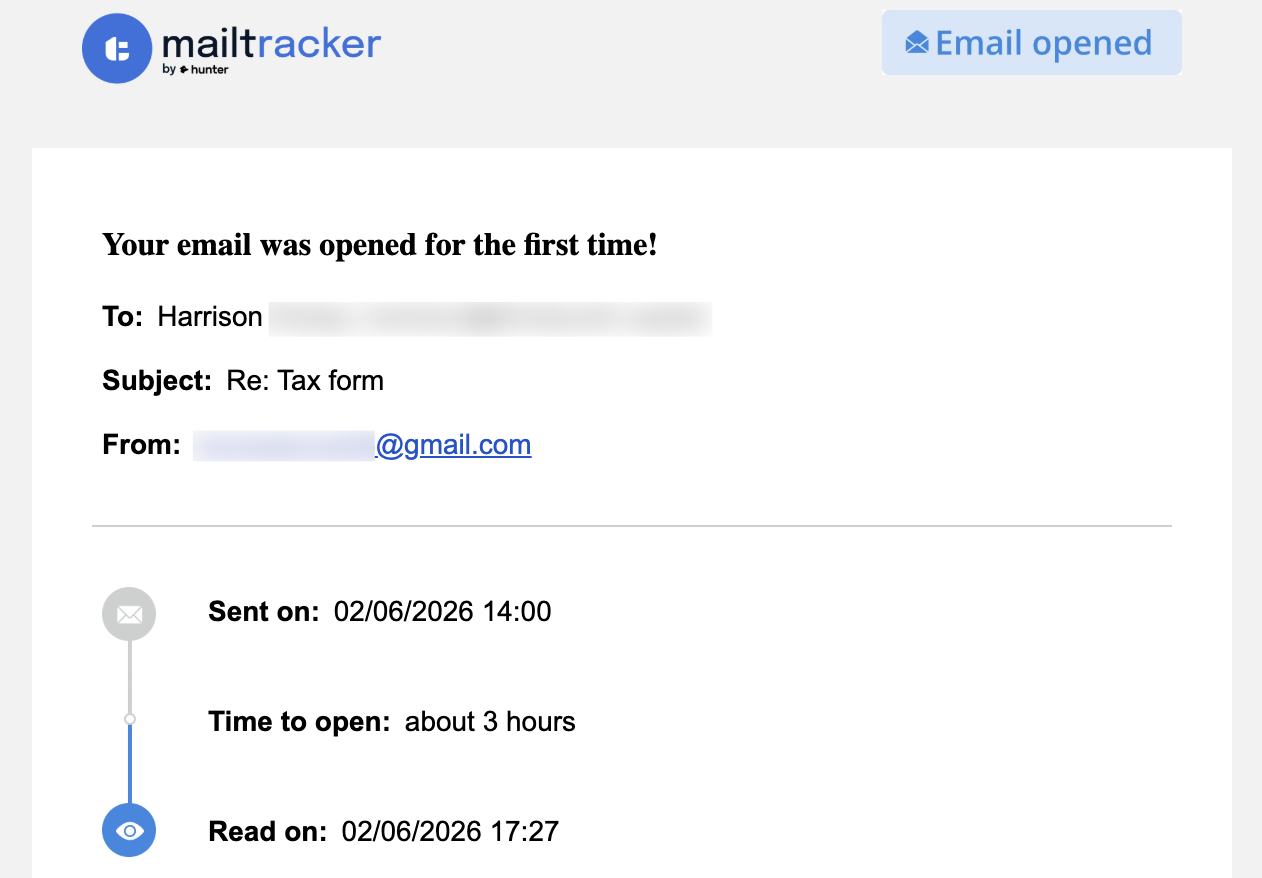
One person told me they sent a negotiation email on a Friday afternoon that sat unopened all weekend. Monday morning, they resent it with a clearer subject line and got a response within an hour. Without knowing it was never opened, they would've just kept waiting.
Try MailTracker for free to see when your negotiation emails are opened, so you can follow up at the right time.
Quick Answers to Common Questions
Can I negotiate salary over email instead of on a call?
Yes. Email gives you time to research, craft your message, and avoid pressure. You can always follow up with a call if they want to discuss further.
What should I include in a salary negotiation email?
Include the job title, express gratitude, state your requested salary with research backing it up, and highlight your value. Be specific with numbers.
What if they offer benefits but not a salary increase?
Thank them and ask if there's room to revisit base salary, signing bonus, or future raises. Keep the conversation open.
How do I know if I have leverage?
You have leverage when: (1) you have another offer, (2) you've researched market rates, (3) you have specialized skills, or (4) they've already invested heavily in recruiting you.

